Introduction
The Oslo Accords, which “strive [for Palestinians and Israelis] to live in peaceful coexistence and mutual dignity and security” opened a series of peace negotiations.1 The status quo and the Second Intifada have shown the instability of established negotiations, demanding a framework of sustainable peace. Thus, the basis of peace should be direct negotiations between leaders and the successful execution of a sustainable resolution prohibiting armed hostility or blockades that may lead to conflicts.
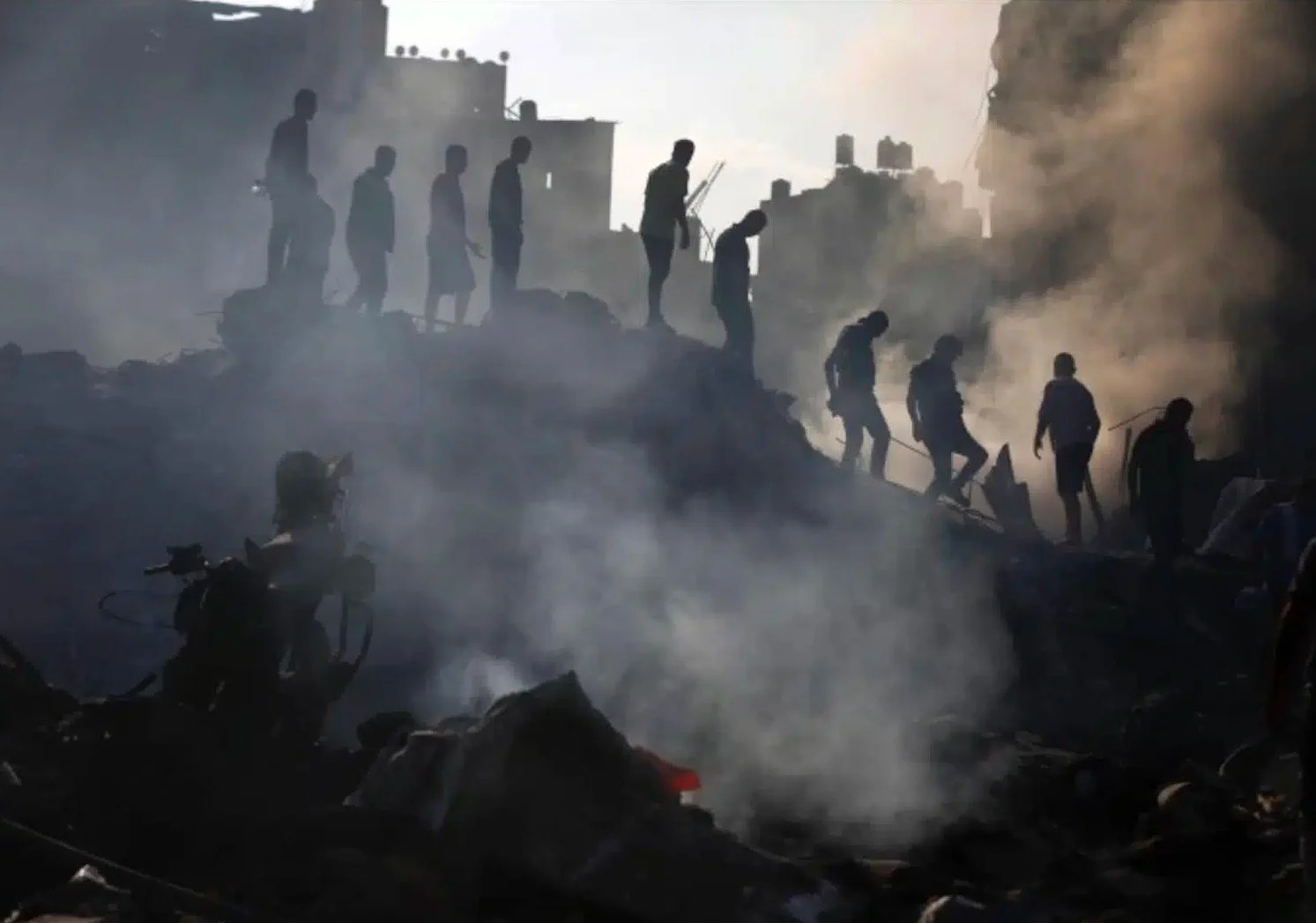
There are two main solutions suggested: the one-state resolution; and the two-state resolution. The stance of Hamas and Netanyahu’s regime aims for a one-state resolution, profoundly unrealistic due to the inability to solve terrorism by force. The IDF’s Iron Fist policy, involving forceful anti-Palestinian acts, enforces the hostile stance Israel hosts towards Palestinian nationalism. This is also evident through the carpet bombing of Gaza after the attack on October 7th. Thus, the aggression between the Likud and Hamas prohibits a one-state solution.
Thus, the two-state resolution is widely supported, with terms further specified in negotiations between former Israeli Prime Minister Ariel Sharon and PA leader Mahmoud Abbas at Sharm elSheik. The resolution is supported by numerous Palestinian public polls2 and adopts the Green Line Israel borders.
The Israeli-Palestinian peace effort has been the spotlight for political analysis since the Six-Day War. Arguments optimistic about the peace are presented in hope of future foreign pressures. Nonetheless discussing the feasibility of peace on a superficial layer is irresponsible. The peace affair is clearly complex as seen by the failed efforts after Resolution 242, a 1967 United Nations resolution to establish peace principles. The complexity of the situation lowers the feasibility of a resolution in the short term. This can be seen through the international stance, local geopolitics, and domestic policies.
The Israel Lobby
To explain why the resolution is hard, it is crucial to bring out the Israel lobby, notably the American Israel Public Affairs Committee (AIPAC). The lobbyist group has been operating in matters concerning the Middle East and holds influence in American diplomatic policies. The lobby’s congressional power is huge. Staffer advantage is seen from the high Jewish composition of the Congress; with allies getting “strong financial support from the myriad pro‐Israel political action committees”.3 In contrast, the “terror tactic” is implemented towards opposing voices. For example, Orthodox Union president Stephen Savisky and critics who “In a strongly worded Jerusalem Post article on November 27, accused Reich of ‘irresponsible behavior’ and ‘crossing red lines.’”4 following Seymour Reich, former Israel Policy Forum president’s pressure for critical West bank border openings. The lobby also aligns anti-Israel policies with antisemitism to criticize politicians who dare talk against Israel. Even President Bush was “pressed by Jewish leaders and Christian evangelicals” to change his policies after attempting to pressure Israel following Operation Desert Storm5.
The impact of the executive and congressional influence is felt directly in the Middle East, where it not only hampers peace efforts but also pushes unstable policies. AIPAC is run by “hardliners who generally supported the expansionist policies of Israel’s Likud Party” making it pro-Likud.6 This creates a link to Israel Prime Minister Benjamin Netanyahu, chairman of the Likud, a rightist Israel party. This indicates support for the actions of the Netanyahu regime, including the war following the October 7th Hamas attack. American politicians are influenced to support policies such as the Abraham Accords “to obtain the support of the Jewish lobby” before elections7. The lobby has seen its role in various acts to encourage interventional acts in the peace process.
Direct examples include the failed peace process between Ariel Sharon and Mahmoud Abbas in 2005 when a ceasefire was signed, and a peaceful era was planned by the two leaders in consensus8. The sudden deterioration of the agreement can be attributed to congressional decisions to forbid direct aid to the Palestinian Authority (PA), inhibiting the PA of a vital package of $350 million to sustain its political role in Palestine. After this “Abbas’ ability to maintain his political/security reforms and the ceasefire with Israel began to deteriorate”9. The measures can be linked to AIPAC not only due to the congressional influence of the lobby; but also, the direct inclusion of AIPAC in the negotiation of the HR 1268 package, a bill undercutting the PA10.Key representatives on the restriction, including House Majority Leader Tom DeLay; Democratic Jewish Representatives Shelley Berkley, Tom Lantos, and Nita Lowey are seen among the top career recipients of pro-Israel PAC funds in 200411, making it clear the lobby’s role in the stagnation of the peace process. This is still relevant to the status quo since AIPAC is still giving political entities supporting Israel hundreds of millions of dollars12.
America has been funding Israel’s military and budgets including the $38 billion aid under the
Obama administration; a $14 billion military aid budget, and an $18 billion f-15 jets order under Biden’s administration13; the aid has catalyzed the Israeli attack since the weapons are directly used in the ongoing war.
The influence over American foreign policy by the AIPAC and its close link with the Likud party thereby rationalizes the decisions Netanyahu made when he stated “that international pressure against Israel would not prompt it to end the war without concessions from the militant group” on March 27th14. As a double precaution, Israel also exploits American opposition against Iran to ensure constant military aid whilst inhibiting the American pressure to end the war, which also staggers the peace process.
This tension brings in the second aspect of the peace resolution concerning the local geopolitics of the region; especially the tension between Iran, a main supporter of Hamas, and Israel.
Geopolitical Tensions
One strategy that the Israeli government, AIPAC, and Christian Zionists15 use to influence the situation in the Middle East to their interest is the forced alignment tactic for Israel’s expansionist policies.
Israel has used its stance against international terrorism, supported by the U.S., to justify expansionist policies. This is not only seen in the Iraq war where neoconservatives sent Bush a letter saying, “Israel has been and remains America’s staunchest ally against international terrorism.”, and that Saddam Hussein should be eliminated. It was also proven when Netanyahu in a meeting with Republican Leaders said there is a “long tradition of the American-Israeli alliance” against the “terror axis of Iran” on April 4th16. This explains the attack on the Iranian embassy in Syria on April 1st, after which US troops were placed on high alert17. The coincidental timing of the attack under the tension suggests that the agenda is to inhibit U.S. pressure on Israel by drawing the U.S. into a common front against Iranian retaliation.
Since the Gulf states also contest Iran for power, this alliance in turn includes the Arabian Gulf states friendly to the U.S., causing the Palestinian issue to be neglected. Examples such as the Camp David Accords and the Oslo Accords have historically solidified the status quo rather than leading to a settlement, and this can also be seen today with the Abraham Accords in 2017.
The Abraham Accords; normalized relations between Israel and several Arab states, weakening pressure on Israel by removing the threat of hostile relations with the Arab states without addressing the core issue of the Israeli-Palestinian conflict. This shift has further weakened the unified Arab support for Palestinian rights. However, this accord doesn’t include Iran, which provided substantial military assistance and at least $222 million between 2014 and 2020 to Hamas18. The intention is clear to form an Alliance of the Sunni Arab states and Israel against Iran19. The alliance’s hostility towards Iran causes more tension with Iran-backed militant groups such as Hezbollah, the Houthis, and Hamas. Jibril Rajoub, secretary general of Fatah’s Central Committee, said that the Hamas onslaught on October 7th was intended to thwart Israel’s neglect of the Palestinian problem enabled by the Abraham Accords20. The Accord normalized the relationship between Israel and the Gulf states, allowing it to neglect directly addressing the Palestinian issue. Thus, the Accords pave the way for future crises by not emphasizing “complex territorial disputes that are the main source of instability in the region” and shifting attention away from a negotiated solution with the Palestinians21.
The Palestinian and Israeli domestic policies
It is vital for leaders to negotiate in peace talks for a resolution. However, Palestine has no representative leadership now. The two parties in Palestine, PA, and Hamas, are both invalid for Palestinian leadership. Hamas is globally recognized as a terrorist organization and is only in control of the Gaza Strip. PA on the other hand has failed to represent the Palestinian majority ever since 2005, after which no election has been held. The PA actually “facilitate[s] Israeli raids into Palestinian towns and villages”22. Netanyahu used the leadership chaos to their advantage and funneled money to Hamas23 to divide the state between the two organizations and weaken the PA.
The Palestinian peace effort in the status quo is weak. There hasn’t been a peace talk that has made significant advances ever since the Olmert peace offer in 2014. The PA’s actions of negotiating with Israel and gaining support internationally have not yielded tangible results. This is reinforced by Israel’s ending of the Cairo peace talks24 in May of 2024. Moreover, public discontent with both Fatah and Hamas is growing, leading to calls for new leadership and reforms. Unfortunately, there has not been a potential leader capable of uniting the Palestinians. A reason for this is the Israeli detention system.
The Israeli detention system, particularly regarding Palestinians, involves a range of legal and administrative mechanisms that have significant implications for detainees and their families. This system has arrested many potential Palestinian leaders. This is paradoxical since most Palestinians call for liberation25, a representative would also have to; however, the Likud party opposes that. This can be proven through the one-state Zionist views of Likud members and support of Christian Zionist organizations.26 The mechanism behind this is both gaining Palestinian support and demanding a Palestinian liberation stance leads to the threat of Israeli detention, meaning a disproportionate number of potential leaders is held in the Israeli Detention system. For instance, senior Fatah leader, Marwan Barghouti, widely seen as a unifying figure who could potentially lead future Palestinian efforts toward statehood, was arrested in 2002 by the IDF under numerous life sentences27. Figures such as Ahmad Sa’adat, Khalida Jarrar, and Sheikh Hassan Yousef were also arrested as part of the Israeli detention system.
The Abraham Accords “give Benjamin Netanyahu a domestic boost that will be useful in easing the existing internal conflicts in the country”28, which relates to the last factor: the Netanyahu regime and Likud party. Netanyahu’s political base is heavily right-wing and includes ultraorthodox groups and nationalists who are strongly opposed to a two-state solution. Maintaining their support is crucial for Netanyahu’s political survival and electoral success, as shown by Israel’s attack on Rafah in which “Finance Minister Bezalel Smotrich, who heads the ultranationalist Religious Zionist party, said Monday that he was seeking “total annihilation” of Israel’s enemies”29. Likud also resorted to land grabs, including illegal West Bank settlement expansions by declaring it “state land”, and the construction of a separation barrier30, which complicated the concrete negotiation for a West Bank border and allocation of civilians. Under the Trump administration, U.S. policy aligned closely with Netanyahu’s views, recognizing Jerusalem as Israel’s capital, and supporting Israeli sovereignty over parts of the West Bank. It also shows that Israel can normalize Arabian relationships without addressing the Palestinian problem, lowering the incentive for the Likud party to pursue a resolution. This support reduced the pressure on Israel and Arab inclination to pursue a two-state solution.
Conclusion:
Palestinian statehood has always been a struggle in the Israeli-Palestinian conflict. Numerous wars and tensions have afflicted both the West Bank and Gaza Strip in the nonstop frenzy of political agendas. The present uncertainty reveals little hope in the short term for a two-state resolution due to the foreign influence in the area as well as the regional geopolitics, and domestic policies.
- United Nations, General Assembly Security. “Declaration of Principles on Interim Self Government Arrangements”
- Opinion Leader’s Survey. “Final Status issues: Boarders, Refugees, Jerusalem, political system and Democracy. Social and Economic Altitude”
- Mearsheimer, J. J., & Walt, S. M. “The Israel Lobby and U.S. Foreign Policy”
- Ori Nir. “O.U. Chief Decries American Pressure on Israel”
- Mearsheimer, J. J., & Walt, S. M
- Mearsheimer, J. J., & Walt, S. M
- Bayrak, Polen. “Abraham Accords: Palestine issue should be addressed for a peaceful Middle East.”
- Oliver, Mark. “Sharon and Abbas Agree Ceasefire”
- Hansen, Miles. “The Israel Lobby and the Israeli-Palestinian Peace Process.”
- McArthur, Shirl. “House tries to restrict aid for Palestinians.”
- Galford, Hugh. “2004 top ten career recipients of pro-Isracl PAC funds.”
- Herman, A., Greve, J. E., & Craft, W. “Pro-Israel money pours in to unseat progressives in congressional races.”
- Crowley, Michael, and Edward Wong. “Gaza War Turns Spotlight on Long Pipeline of U.S. Weapons to Israel.”
- The Associated Press. “Netanyahu: Pressure on Israel Won’t Prompt End to War Without Hamas Concessions”
- Pappe, Ilan. “Clusters of History: US Involvement in the Palestine Question.”
- Chehayeb, Kareem, and Albert Aji. “Iran’s Revolutionary Guard Says Two Generals Killed in Strike on Syrian Consulate”
- Knickmeyer and Baldor. 2024. “US Braces for Retaliation After Attack on Iran Consulate”
- Iran International Newsroom. “Iran’s Over $220M Support to Hamas Revealed in Times Report.”
- Lazin, Fred A. “President Donald Trump’s Abraham Accords Initiative: Prospects for Israel, the Arab States, and Palestinians.”
- The Times of Israel. “Senior Fatah official justifies Oct. 7 massacre as ‘defensive war’ against Israel.”
- Bayrak, Polen. “Abraham Accords: Palestine issue should be addressed for a peaceful Middle East.”
- Munayyer, Yousef. “The Problem of Legitimacy for the Palestinian Authority”
- The Times of Israel “For Years, Netanyahu Propped up Hamas. Now It’s Blown up in Our Faces.”
- The Associated Press. “Israel Closes Key Crossing Point for Aid Delivery After Hamas Attack Kills Three Soldiers”
- Opinion Leader’s Survey
- Pappe, Ilan
- Middle East Monitor. “Jailed Palestinian leader Marwan Barghouti beaten by guards” Bayrak, Polen.
- Goldenberg, Tia, and Matthew Lee. 2024. “Netanyahu Vows to Invade Rafah ‘with or Without a Deal”
- B’Tselem. 2006. “LAND GRAB: ISRAEL’S SETTLEMENT POLICY IN THE WEST
- BANK” B’Tselem: The Israeli Information Center for Human Rights in the Occupied Territories (Excerpted from a Report of May 2002)
Bibliography
- Bayrak, Polen. “Abraham Accords: Palestine Issue Should Be Addressed for a Peaceful Middle East.” Cappadoxia Journal of Area Studies, June 2021. https://dergipark.org.tr/en/download/article-file/1851644.
- B’Tselem. “‘Land Grab: Israel’s Settlement Policy in the West Bank.’” B’Tselem: The Israeli Information Center for Human Rights in the Occupied Territories, 2006. In Stanford University Press eBooks, 187–90. https://doi.org/10.1515/9781503625815-019.
- Chehayeb, Kareem, and Albert Aji. “Iran’s Revolutionary Guard Says Two Generals Killed in Strike on Syrian Consulate.” AP News, April 2, 2024. https://apnews.com/article/israel-syria-airstrike-iranian-embassy-edca34c52d38c8bc57281e4ebf33b240.
- Crowley, Michael, and Edward Wong. “Gaza War Turns Spotlight on Long Pipeline of U.S. Weapons to Israel.” The New York Times, April 6, 2024. Accessed April 15, 2024. https://www.nytimes.com/2024/04/06/us/politics/israel-us-weapons.html.
- Federman, Josef, and Kareem Chehayeb. “Israel Closes Key Crossing Point for Aid Delivery After Hamas Attack Kills Three Soldiers.” AP News, May 5, 2024. https://apnews.com/article/israel-palestinians-gaza-hamas-war-humanitarian-aid-5fb0455b81674b2bfe38d997c95d6f00.
- Friedman, Thomas. “The Love Triangle That Spawned Trump’s Mideast Peace Deal.” The New York Times, September 15, 2020. https://www.nytimes.com/2020/09/15/opinion/trump-israel-bahrain-uae.html.
- Galford, Hugh. “2004 Top Ten Career Recipients of Pro-Israel PAC Funds.” Washington Report on Middle East Affairs, July/August 2004, 27. https://www.wrmea.org/2004-july-august/2004-top-ten-career-recipients-of-pro-israel-pac-funds.html.
- Goldenberg, Tia, and Matthew Lee. “Netanyahu Vows to Invade Rafah ‘with or Without a Deal.’” AP News, May 1, 2024. https://apnews.com/article/israel-hamas-war-news-04-30-2024-f5e14fd176d69f9c4e23b48f3ab5af6a.
- Hansen, Miles. “The Israel Lobby and the Israeli-Palestinian Peace Process.” Sigma: Journal of Political and International Studies 26, no. 1 (2008): 2. https://scholarsarchive.byu.edu/cgi/viewcontent.cgi?article=1169&context=sigma.
- Herman, A., J. E. Greve, and W. Craft. “Pro-Israel Money Pours in to Unseat Progressives in Congressional Races.” The Guardian, April 17, 2024. https://www.theguardian.com/us-news/2024/apr/17/pro-israel-money-progressives-congress-challenges.
- Iran International Newsroom. “Iran’s Over $220M Support to Hamas Revealed in Times Report.” Iran International, 2024. https://www.iranintl.com/en/202404127530.
- Knickmeyer, Ellen, and Lolita Baldor. “US Braces for Retaliation After Attack on Iran Consulate.” AP News, April 3, 2024. https://apnews.com/article/pentagon-mideast-israel-hamas-syria-iran-a083ddef0db28cde2a6fdd84e0a56367.
- Lazin, Fred A. “President Donald Trump’s Abraham Accords Initiative: Prospects for Israel, the Arab States, and Palestinians.” Politics & Policy 51, no. 3 (2023): 476–87. https://doi.org/10.1111/polp.12533.
- McArthur, Shirl. “House Tries to Restrict Aid for Palestinians.” Washington Report on Middle East Affairs, May/June 2005, 28.
- Mearsheimer, John J., and Stephen M. Walt. The Israel Lobby and U.S. Foreign Policy. SSRN Electronic Journal, 2006. https://doi.org/10.2139/ssrn.891198.
- Middle East Monitor. “Jailed Palestinian Leader Marwan Barghouti Beaten by Guards.” Middle East Monitor, March 19, 2024. https://www.middleeastmonitor.com/20240319-jailed-palestinian-leader-marwan-barghouti-beaten-by-guards/.
- Munayyer, Yousef. “The Problem of Legitimacy for the Palestinian Authority.” Arab Center Washington DC, May 6, 2021. https://arabcenterdc.org/resource/the-problem-of-legitimacy-for-the-palestinian-authority/.
- Nir, Ori. “O.U. Chief Decries American Pressure on Israel.” The Forward, December 2, 2005. https://forward.com/news/2369/ou-chief-decries-american-pressure-on-israel/.
- Oliver, Mark. “Sharon and Abbas Agree Ceasefire.” The Guardian, February 18, 2005. https://www.theguardian.com/world/2005/feb/08/israel4.
- Opinion Leader’s Survey. Final Status Issues: Borders, Refugees, Jerusalem, Water ~ Political System and Democracy. Social and Economic Attitudes. Birzeit University Development Studies Programme, February 28, 2007. https://cds.birzeit.edu/2007-opinion-leaders-survey/.
- Pacchiani, Gianluca. “Senior Fatah Official Justifies Oct. 7 Massacre as ‘Defensive War’ Against Israel.” The Times of Israel, November 26, 2023. https://www.timesofisrael.com/senior-fatah-official-justifies-oct-7-massacre-as-defensive-war-against-israel/.
- Pappé, Ilan. “Clusters of History: US Involvement in the Palestine Question.” Race & Class 48, no. 3 (2007): 1–28. https://doi.org/10.1177/0306396807073853.
- Schneider, Tal. “For Years, Netanyahu Propped up Hamas. Now It’s Blown up in Our Faces.” The Times of Israel, October 8, 2023. https://www.timesofisrael.com/for-years-netanyahu-propped-up-hamas-now-its-blown-up-in-our-faces/.
- The Associated Press. “Netanyahu: Pressure on Israel Won’t Prompt End to War Without Hamas Concessions.” AP News, March 27, 2024. https://apnews.com/video/israel-hamas-war-israel-hamas-war-and-unrest-israel-government-e32abbe264ed4a5597d64e6889d98601.
- United Nations, General Assembly Security Council. Declaration of Principles on Interim Self-Government Arrangements. Washington, DC: UN Headquarters, 2016.


 基豪斯论坛
基豪斯论坛 
向tcwiltchamberlain117进行回复 取消回复